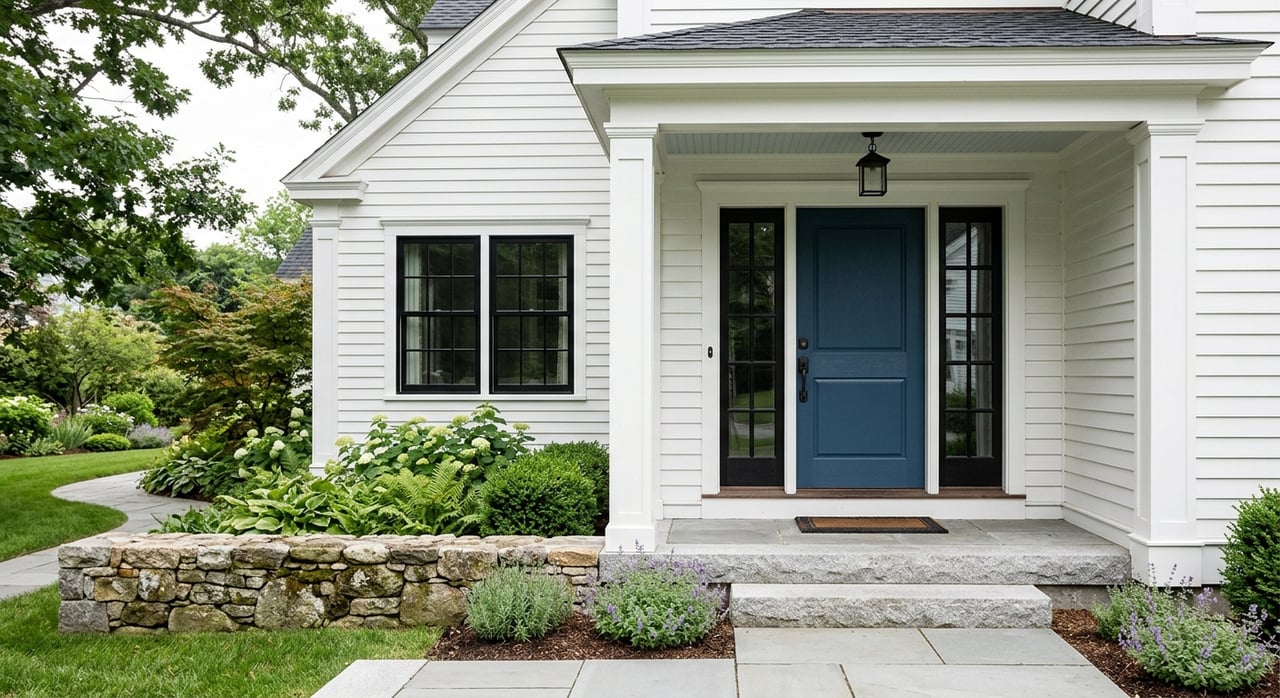
If you are deciding between a brand-new home and an older property in Natick, the choice is not as simple as “modern versus dated.” In this market, you are often balancing newer systems, current code standards, and energy performance against established housing stock, mature lots, and more options in existing neighborhoods. The good news is that once you understand how Natick’s housing mix, zoning, and pricing work, the decision gets much clearer. Let’s dive in.
Natick market context
Natick remains a competitive place to buy. According to Redfin’s Natick housing market data, the median sale price was $950,000 in February 2026, homes sold in about 17 days, and properties averaged roughly 4 offers.
That speed matters whether you are looking at a new build or a resale home. It also helps explain why buyers often compare both paths at the same time instead of ruling one out too early.
Current listing data shows the pricing gap is not especially wide. Redfin reports 87 active listings overall and 14 new-construction listings, with a median new-construction list price of $979,000, which suggests that in today’s Natick market, new construction is not always dramatically more expensive than resale.
Why resale still dominates Natick
If you want the broadest selection, resale homes are where most of Natick’s housing stock lives. Natick’s Housing Production Plan shows that 60% of the housing stock is detached single-family, 58% was built before 1960, and only 4% was built in 2010 or later.
That has a practical impact on your search. If you are hoping for an established street pattern, older architecture, or a home in one of Natick’s long-built neighborhoods, resale will usually give you more choices.
It also means many resale buyers should expect some variation in condition. Older homes may have strong fundamentals and attractive locations, but they are more likely to need updates to systems, insulation, or overall efficiency over time.
What new construction offers
The biggest appeal of new construction is simple: newer systems, newer materials, and current code compliance. In Natick, the Building Department follows the 2021 Stretch Code, and the residential permit process requires an Energy Conservation Application Form and stamped plans, with new homes requiring an architect or engineer stamp.
For you as a buyer, that often translates into a home built to current standards rather than one that has been improved in stages over several decades. You may also get a more current floor plan and a lower chance of near-term replacement costs for major components.
That said, a new build is usually a more process-heavy purchase. Compared with a standard resale closing, there can be more documentation, more permit-related items to review, and more builder-specific questions to ask before you commit.
What resale homes do better
Resale homes often offer strengths that do not show up on a feature sheet. In Natick, they are usually the main route into established neighborhoods and older single-family areas that make up much of the town’s housing inventory.
They may also give you a different lot experience. While not every resale property has a larger yard, older housing patterns can feel different from newer infill or open-space development layouts.
Resale can also give you more flexibility in how and when you improve the property. Instead of paying upfront for every new feature, you may choose to update systems, finishes, or efficiency measures over time based on your priorities and budget.
Price difference: smaller than many expect
A common question is whether new construction in Natick is automatically far more expensive. Right now, the data suggests the answer is not always.
With Natick’s median sale price at $950,000 and the median new-construction list price at $979,000, the gap looks narrower than many buyers assume. That does not mean every new home and resale home are directly comparable, but it does mean you should look carefully at value rather than relying on old assumptions.
In practice, the better question is often this: are you paying for newer systems and lower short-term maintenance, or are you paying for a location, lot, or home style that is harder to find in new construction?
Lot size can change the equation
In Natick, lot size is one of the most important trade-offs in this decision. The town’s zoning bylaws set minimum lot areas at 15,000 square feet in RSA, 40,000 square feet in RSB, and 20,000 square feet in RSC.
At the same time, Natick also uses open-space residential development to preserve common open space and diversify housing stock. In those settings, OSRD lots can be as small as 5,000 square feet.
For you, that means a newer home may come with a smaller private yard than you expected, even if the overall development includes preserved open space. When you compare properties, ask whether the home sits on a standard lot or is part of an open-space or cluster-style design.
New builds involve more local review
Another Natick-specific issue is site work. Under the town’s stormwater rules, any project that constructs or fully reconstructs a new single-family home, or disturbs 3,000 square feet or more of land, must provide stormwater management and may require a stormwater permit.
That is a meaningful difference from many resale transactions. A resale purchase usually does not involve the same level of new-site review, while a new home may require you to understand permit status, drainage planning, and whether required approvals are complete.
This does not make new construction a bad choice. It simply means the due diligence is different and often more technical.
Energy efficiency is a major new-home advantage
One of the strongest arguments for new construction is energy performance. Because new homes are built to current standards, buyers often benefit from more efficient systems and tighter construction from day one.
Natick also highlights Mass Save energy programs, including no-cost home energy assessments for residents. The town notes that participants save about $200 to $400 per year on average.
There is also a federal angle tied to qualifying new homes. Natick notes that the New Energy Efficient Home Credit can provide up to $5,000 to developers, with the credit set to expire June 30, 2026.
Resale homes can still improve over time
If resale is the better fit for your budget, neighborhood goals, or lot preferences, the efficiency gap is not necessarily permanent. Natick residents can still use Mass Save assessments and may have access to incentives for insulation, air sealing, clean heating and cooling, and water heating.
Mass Save also offers a 0% HEAT Loan for eligible energy-efficient upgrades. That creates a practical path for buyers who prefer to purchase an older home and improve performance after closing instead of paying for every upgrade upfront.
When you compare resale homes, it helps to look beyond cosmetic finishes. Utility cost history, existing insulation, heating and cooling age, and prior efficiency improvements can all shape the home’s real monthly cost.
Warranty differences matter
One of the clearest distinctions between new construction and resale is warranty coverage. According to the Federal Trade Commission’s guidance on new-home warranties, a builder warranty generally comes with new home construction or a remodel and often covers workmanship and materials on permanent parts of the home.
The FTC says a common pattern is 1 year for many finish items, 2 years for HVAC, plumbing, and electrical systems, and up to 10 years for major structural defects. The same guidance also notes that many warranties do not cover temporary living expenses during repairs and may require mediation or arbitration if disputes arise.
That is different from a home warranty often associated with an existing home. The FTC describes that as an extra-cost service contract that typically covers selected systems or appliances, not construction defects or workmanship.
Smart questions to ask before you choose
Whether you lean toward new construction or resale, a few focused questions can help you make a better decision in Natick.
Questions for new construction
- Is the home on a standard lot or in an OSRD or cluster-style layout?
- What stage are the building and local approvals in?
- Has any required stormwater review been completed?
- What does the builder warranty cover, and for how long?
- What energy-code and permit documents are available for review?
Questions for resale homes
- When were the roof, heating, cooling, and water systems last updated?
- What does recent utility usage suggest about operating costs?
- Has the home already completed insulation or air-sealing improvements?
- What future upgrades are likely in the first few years of ownership?
- Does the lot, location, or layout offer value that would be hard to replace in new construction?
Which option fits your goals best?
If you want lower near-term maintenance, current construction standards, and stronger day-one efficiency, new construction may be the better match. If you value established housing stock, more access to Natick’s older single-family neighborhoods, or the chance to improve a home over time, resale may offer the better long-term fit.
In Natick, this decision is rarely about one option being universally better. It is about understanding which trade-offs matter most to you, then matching them to what the local market actually offers.
If you want help comparing specific homes, evaluating lot and pricing trade-offs, or understanding how Natick’s market conditions affect your move, Steve Leavey offers the kind of local, data-informed guidance that can make this decision feel much more manageable.
FAQs
What is the price difference between new construction and resale homes in Natick?
- Based on Redfin’s Natick market data, the town-wide median sale price was $950,000 and the median new-construction list price was $979,000, so the gap is narrower than many buyers expect.
Do new construction homes in Natick always have smaller yards?
- Not always, but Natick’s zoning bylaws allow open-space residential development with smaller lots, so some newer homes may trade private yard space for newer design and shared open space.
Can resale homes in Natick be made more energy efficient?
- Yes. Natick residents can use Mass Save-related energy assistance programs, including no-cost assessments, incentives for improvements, and a 0% HEAT Loan for eligible upgrades.
What should buyers review before purchasing new construction in Natick?
- Buyers should review the builder warranty, permit status, energy-code paperwork, and whether any required stormwater review has been completed.
Why are resale homes more common than new construction in Natick?
- Natick’s Housing Production Plan shows that much of the housing stock is older, with 58% built before 1960 and only 4% built in 2010 or later, so resale remains the main path into much of the town’s housing supply.