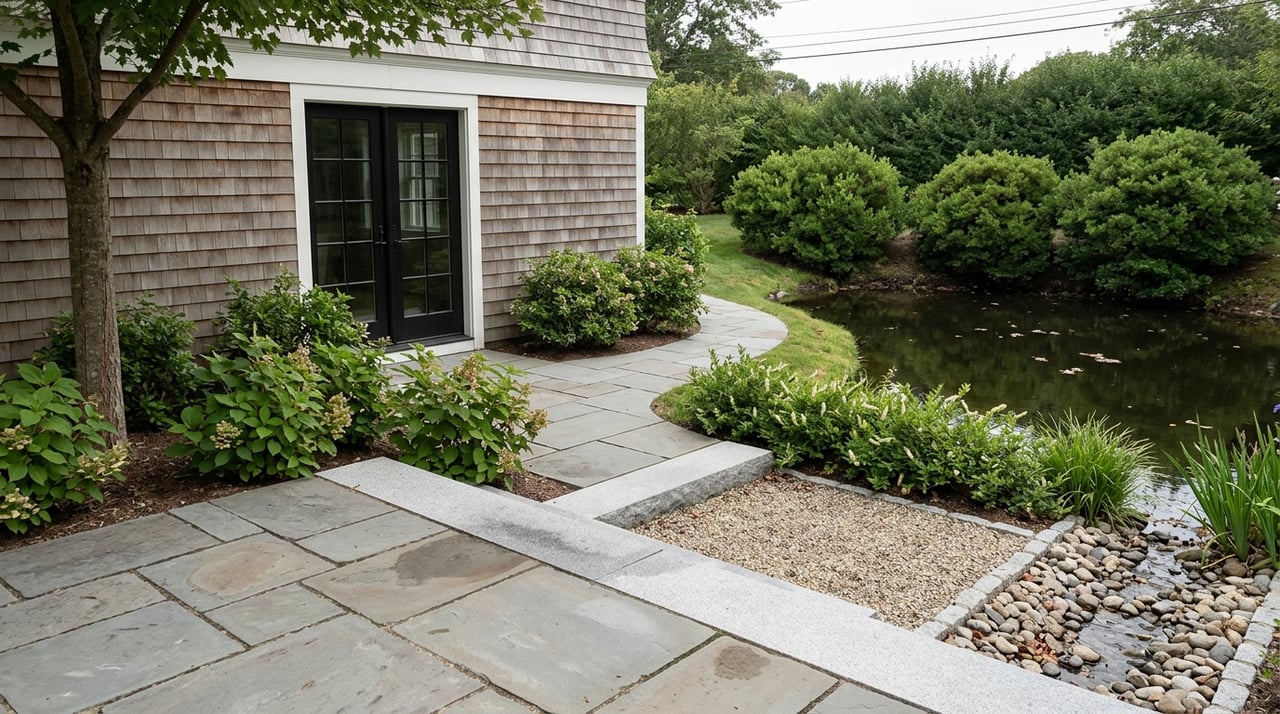
If you picture an ideal Wayland home with water nearby, you are not alone. In this market, homes near Lake Cochituate, Dudley Pond, or the Sudbury River can offer a special mix of scenery, recreation, and long-term appeal, but they also come with extra questions that many buyers do not face elsewhere. This guide will help you understand what to look for, what can affect value, and where careful due diligence matters most before you make a move. Let’s dive in.
Why water homes stand out in Wayland
Wayland’s water-oriented housing appeal is shaped by several distinct natural features, not just one shoreline pocket. Buyers are often focused on Lake Cochituate, Dudley Pond, the Sudbury River, and smaller ponds connected to the town’s broader conservation network.
That variety matters because each setting can offer a different ownership experience. A home on one pond may provide direct frontage, while another may offer shared access, a view, or proximity to public recreation without private shoreline rights.
Lake Cochituate is especially important in the local conversation. According to the Town of Wayland, it consists of North, Middle, and South Pond, covers about 625 acres, and reaches roughly 70 feet at its deepest point.
That means buyers should think beyond the phrase “near the lake.” Which pond a property touches, how usable the shoreline is, and what kind of access comes with the home can all affect both lifestyle and value.
What kinds of water properties you may find
Wayland’s water-adjacent inventory is typically limited, so it helps to know the categories you may encounter. In practice, these properties can look very different from one another even when they are marketed under a similar waterfront label.
Common property types include:
- Direct waterfront homes
- Pond-adjacent homes
- Homes with deeded water access
- Homes with shared water access
- Buildable lots with water views
- Parcels with possible dock rights
A direct-frontage property usually offers the clearest water connection, but it may also bring the highest price and the most regulatory review. A deeded-access or shared-access property can still offer a strong lifestyle fit if the rights are well documented and the access is truly usable.
Why pricing is usually higher near water
Wayland is already a high-value market, and water-oriented homes often sit above that baseline. Recent market snapshots cited in the research report place the broader Wayland market around the mid-$1 million range, with median listing prices near $1.25 million, median sale prices around $1.1 million, and waterfront-specific medians around $1.3 million.
The reason is not just scenery. Scarcity plays a major role, since only a handful of waterfront listings may be active at any given time.
When supply is this thin, small property differences can have a major pricing impact. Lot size, frontage quality, views, access rights, and permit status can all shift value in a meaningful way.
The listing examples in the research report show how broad the range can be. A Dudley Pond parcel with deeded direct water access and private dock rights was marketed at $635,000, while homes near water have been positioned well above $1 million.
What “water access” really means
One of the biggest mistakes buyers can make is assuming all water-oriented listings offer the same rights. In Wayland, the details matter.
Before you move forward, confirm exactly what is being sold. A property may offer direct frontage, deeded access, shared access, public beach proximity, or simply a water view.
Those are not minor differences. They shape how you can use the property today and what buyers may value when it is time to resell.
As you evaluate a listing, ask for documentation on:
- Shoreline ownership
- Deeded access rights
- Shared-access agreements
- Dock rights, if any
- Easements affecting the lot
- Any recorded restrictions on water use
If a property is marketed around a lake lifestyle, you want the paperwork to support that story. In a niche market, documented rights are often more valuable than assumptions.
Lake Cochituate and Dudley Pond differences
Not every water setting in Wayland offers the same experience. Lake Cochituate and Dudley Pond are both major draws, but they have different characteristics buyers should understand.
Lake Cochituate is a three-pond system and a major recreational resource. Wayland’s Town Beach is located on North Pond, and the town notes that motorized boat access is not available from the beach itself.
That is an important point for buyers who care about boating. If watercraft access is central to your plans, you should verify the actual launch options and any limits tied to the specific location of the home.
Dudley Pond is a 91-acre Great Pond, according to MassWildlife, and its shores are described as heavily developed. That can create a different feel than a more buffered shoreline area, and it may also affect how buyers compare privacy, views, and lot layout.
Wetlands rules can shape what you can do
Buying near water in Wayland is not just about enjoying the setting. It is also about understanding what the regulations may allow.
The Wayland Conservation Commission administers both the Massachusetts Wetlands Protection Act and Wayland’s Wetlands and Water Resources Bylaw. According to the town, construction, earth-moving, or alteration of soils or vegetation within 100 feet of wetlands and 200 feet of a perennial stream requires Commission authorization.
Wayland also defines wetlands broadly. That can include ponds, streams, vernal pools, banks, bordering vegetative wetlands, flood plains, and forested wetlands.
For buyers, this means even simple ideas can require more review than expected. Expanding a patio, clearing brush, regrading a yard, or planning an addition may all need closer analysis if the property is near a regulated resource area.
Floodplain concerns to check early
Flood risk is another key part of waterfront due diligence. In Wayland, the local bylaw treats the mapped 100-year floodplain as the Federal Flood Protection District, including FEMA Zones A and AE.
The town’s regulations also state that encroachments in the floodway are prohibited unless engineering certification shows no increase in flood levels. That is highly relevant if you are considering future improvements to a waterfront or water-adjacent home.
Before you get too far into a purchase, confirm whether the house, driveway, garage, or lower level sits in or near a mapped flood zone. Do not rely on assumptions based on appearance alone.
The official flood hazard map source is FEMA’s Flood Map Service Center, and MassDEP notes that areas subject to a 1% annual chance flood are identified on FEMA flood maps and the National Flood Hazard Layer. In practical terms, this is a basic check that can affect both planning and ownership costs.
Recreation, water quality, and everyday use
A beautiful shoreline does not tell you everything about day-to-day enjoyment. In Wayland, buyers should also consider public rules, water testing, and waterbody-specific conditions.
The town says Wayland Town Beach water is tested weekly by the Board of Health. For many buyers, that is a useful detail when thinking about warm-weather recreation and general water conditions.
At the same time, the Town Beach page notes that there is no public motorized boat ramp there. Buyers who expect easy launch access should verify where boating access is actually available before making a decision.
The town has also posted a fish consumption advisory for Lake Cochituate based on PFAS and PCB testing. If fishing is part of your lifestyle goals, that is a practical issue worth understanding upfront.
Conservation land can be a plus and a limit
Wayland’s conservation footprint is one reason the town feels distinctive. According to the Conservation Commission, about 20% of Wayland’s area is protected open space, including Great Meadows National Wildlife Refuge and other town or nonprofit conservation lands.
That protected land can help preserve views, buffers, and the natural character many buyers want. It can also support long-term appeal for properties near water and open space.
At the same time, nearby conservation land may come with limits. Some parcels may face long-term restrictions on clearing, expansion, or shoreline modification, so buyers should weigh both the benefits and the constraints.
This is especially important if you are buying with renovation plans in mind. A lot that feels spacious on a showing may be less flexible once wetlands and conservation setbacks are fully mapped.
What helps resale value later
Water properties often attract buyers because they feel rare, and resale value tends to follow the features that are hardest to replicate. In Wayland, that usually means documented shoreline rights, usable frontage, attractive views, and a clearer path for future permitting.
On the other side, the biggest resale risks are also fairly predictable. Floodplain exposure, conservation restrictions, and waterbody-specific maintenance issues can all narrow the buyer pool if not addressed early and clearly.
Wayland’s Surface Water Quality Committee monitors major water bodies in town and tracks issues such as invasive weed growth. That is a good reminder that water living can be rewarding, but it is not always low-maintenance.
If you plan carefully on the front end, you are more likely to buy a property that works well for you now and still presents well when it is time to sell.
A practical buyer checklist
If you are considering buying near water in Wayland, keep your process disciplined. The right home can be an excellent fit, but only if the details match your expectations.
Use this checklist as a starting point:
- Confirm whether the property offers direct frontage, deeded access, shared access, or only a view
- Review any documents tied to shoreline, dock, or access rights
- Check whether the home or lot is in or near a FEMA-mapped flood zone
- Ask whether planned improvements may trigger Conservation Commission review
- Evaluate shoreline condition and actual usability, not just appearance in photos
- Verify recreation details that matter to you, such as launch access or fishing conditions
- Consider long-term resale through the lens of rights, restrictions, and maintenance
In a low-supply market, it is easy to focus on scarcity and move too fast. A more careful approach usually leads to a stronger decision.
Buying near water in Wayland can be a smart lifestyle and investment move when you understand what you are really purchasing. The best outcomes usually come from balancing the emotional pull of the setting with a clear review of access rights, regulatory limits, flood exposure, and future resale strength. If you want experienced, data-informed guidance as you evaluate waterfront, pond-adjacent, or land opportunities in Wayland, connect with Steve Leavey.
FAQs
What should buyers verify about water access in Wayland?
- Buyers should confirm whether a property includes direct frontage, deeded access, shared access, dock rights, or only a water view, and review the supporting documents carefully.
What makes Lake Cochituate homes different from other Wayland water properties?
- Lake Cochituate is a three-pond system covering about 625 acres, so the specific pond, shoreline condition, and type of access can materially affect how a property lives and how it is valued.
What wetlands rules affect homes near water in Wayland?
- Wayland says construction, earth-moving, or alteration of soils or vegetation within 100 feet of wetlands and 200 feet of a perennial stream requires Conservation Commission authorization.
What flood risk checks matter for Wayland waterfront buyers?
- Buyers should verify whether the house, driveway, garage, or lower level is in or near a mapped FEMA flood zone because floodplain location can affect future improvements and ownership costs.
What should buyers know about recreation on Lake Cochituate in Wayland?
- The town says Wayland Town Beach is on North Pond, beach water is tested weekly, and motorized boat access is not available from the beach itself.
Are water-oriented homes in Wayland usually more expensive?
- Yes. Recent market snapshots in the research report indicate that waterfront-specific pricing tends to run above Wayland’s already high broader market baseline, largely because inventory is limited.